Core Concepts to Explore
Understanding Your Healing Journey

The Language of Energy
Glossary of Terms

The Compromise Audit
To break the autopilot of the Phantom Persona, you must start noticing the small moments where you bend your own boundaries or ignore your needs to accommodate someone else. Simply pausing to ask, "Where am I compromising myself right now?" is the first step to identifying your energy leaks and reclaiming your authenticity.

The Sacred 'No'
A vital step in your deep healing and shadow work is learning that a clear, honest "No" is always better than a resentful, draining "Yes". When you practice the Sacred No, your boundaries start radiating self-trust.
Rose Rocking
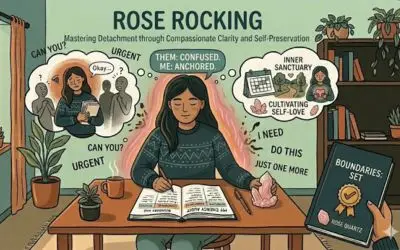
When navigating toxic or narcissistic dynamics, it is common to use the "Grey Rock" method to go numb and survive. True healing and integration, however, asks you to eventually drop the grey stone and embody the "Rose Rock." This means remaining grounded and contained while holding the unshakeable frequency of deep, unconditional love, so you no longer have to dim your own light just because you are in their presence.
Our Emotional Inheritance
Exploring Ancestral Healing

The History & Science of Ancestral Healing
Across the globe, many indigenous cultures perform a variety of rituals on their family members after they die. These rituals heal the Spirit of their dearly departed of their emotional and spiritual traumas, so they are unburdened in the afterlife.
The bonds to family, tribe, clan, and community extend beyond our lifespan. I had a teacher explain, "you may not think you are having a relationship with your ancestors but they are having a relationship with you." Our ancestors interact with us. Most commonly, they communicate directly with us through our unconscious or during dream time.
We have learned in the last decade or two that the traumas of our ancestors are passed down to us through our epigenetic DNA. Between the trauma patterns in the DNA and the direct communication, or "guidance," we receive through our unconscious and the influence our ancestors have upon our own patterns of behavior and beliefs is pretty strong.
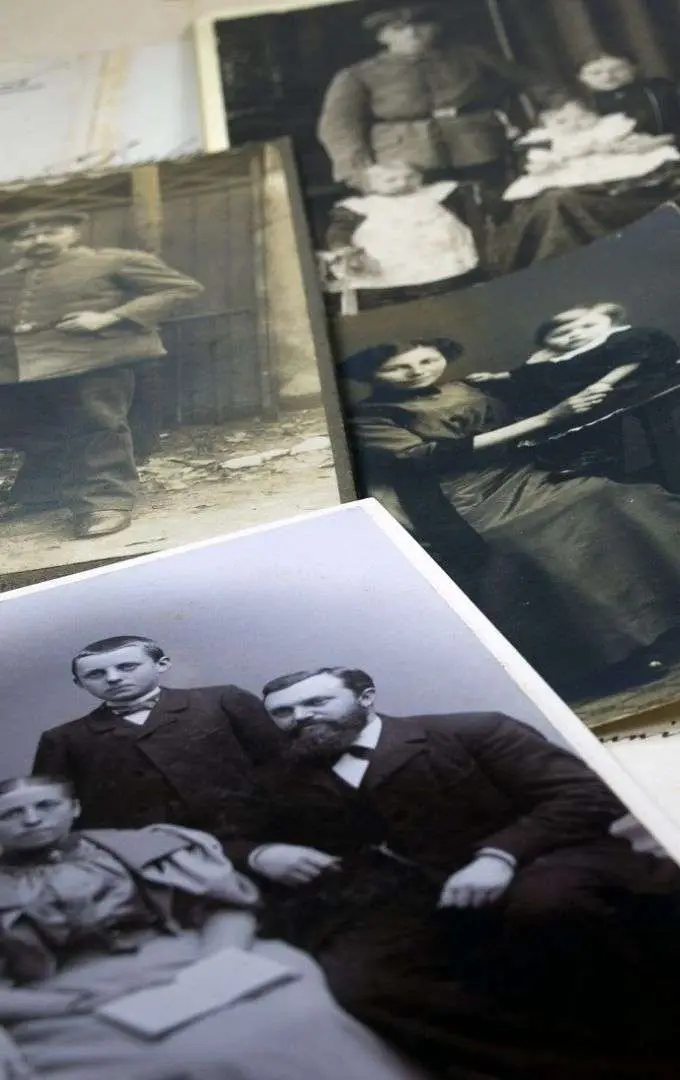
Generational Trauma
We see this in families that have a generational history of physical abuse or addiction. You may see it through other patterns like depression, anxiety, or rage. When we choose to get help to address these patterns, it can be difficult to get beyond the pattern with traditional forms of therapy.
Traditional therapies don't address the ancestral influence. For that, you need energy healing. Energy healing is proven to release the markers in epigenetic DNA, as well as release the ancestor from their trauma story, and heal the ancestral line all the way to you.
It breaks the spell, so to speak. You can see the whole situation from a brand new perspective that holds a variety of options and resources for solving your issues.
Ancestral healing is about ending patterns of trauma within the family, so you and your children, and their children, don't have to deal with those influences anymore. It is powerful medicine.

Why It Matters Now
Our 21st-century Western culture has no rituals for the Spirit's of our dead. As a result, we can look at the news on any given night and see the effects on our culture. Mass shootings, addiction epidemics, racism, misogyny, and more. The rates of mental illness both diagnosed and undiagnosed is, in my opinion, a direct result of generational and historic trauma.
We are in the Courageous Decade as my astrologer colleague Vanessa Couto likes to say. Beginning in 2020, we have entered a cycle that will last a decade. This cycle is breaking down what doesn't work in our society and seeking to shift us on the emotional and spiritual levels.
Now is the time to do our inner work. Since 2017, my practice saw a sharp uptick in the healing that comes through me. The vast majority of energy healing is ancestral. The energies are aligning for outer and inner healing.

Claiming Your Sovereignty
Ending our own suffering and struggle with trauma patterns has ripple effects on our family, friends, and community. But the most important reason to choose ancestral healing is to find relief from the challenges we inherited.
If you see a family pattern that you would like to change but so far nothing you have tried has really worked, I hope you try ancestral healing.
Ancestral healing is one of a variety of tools I use in Quantum Alignment sessions. Quantum Alignment sessions are intended to bring you into alignment with your authentic energetic blueprint, releasing all patterns of behavior and beliefs that have been taught but do not align with your Soul's plan for your life.

Begin Your Journey to Alignment
If you are ready to take the next step in your healing and growth, you do not have to navigate the journey alone. Quantum Alignment is a 1:1 multidimensional energy healing container designed for deep, personalized self-inquiry and past-life or ancestral healing. If you are ready to bring your body, mind, and spirit back into beautiful coherence, explore Quantum Alignment and book your session.
Recommended Reading for the Journey
The Library

The Works of Brené Brown
Brene Brown - All the books!
From Brené:
Here’s how I think of the progression of my work:
The Gifts of Imperfection—Be you.
Daring Greatly—Be all in.
Rising Strong—Fall. Get up. Try again.
I offer brief overviews of my work at the start of Daring Greatly and Rising Strong, but reading The Gifts is always a good place to start.
What transforms this book from words on a page to effective daily practices are the ten guideposts to wholehearted living. The guideposts not only help us understand the practices that will allow us to change our lives and families, they also walk us through the unattainable and sabotaging expectations that get in the way.
Atlas of the Heart by Brené Brown
Atlas of the Heart
Mapping Meaningful Connection and the Language of Human Experience
If we want to find the way back to ourselves and one another, we need language and the grounded confidence to both tell our stories and to be stewards of the stories that we hear. In Atlas of the Heart, we explore eighty-seven of the emotions and experiences that define what it means to be human and walk through a new framework for cultivating meaningful connection. This is for the mapmakers and travelers in all of us.
Emotional Agility by Susan David, PhD
Emotional Agility
by Susan David, PhD
The counterintuitive approach to achieving your true potential, heralded by the Harvard Business Review as a groundbreaking idea of the year.
The path to personal and professional fulfillment is rarely straight. Ask anyone who has achieved his or her biggest goals or whose relationships thrive and you’ll hear stories of many unexpected detours along the way. What separates those who master these challenges and those who get derailed? The answer is agility—emotional agility.
Emotional agility is a revolutionary, science-based approach that allows us to navigate life’s twists and turns with self-acceptance, clear-sightedness, and an open mind. Renowned psychologist Susan David developed this concept after studying emotions, happiness, and achievement for more than twenty years. She found that no matter how intelligent or creative people are, or what type of personality they have, it is how they navigate their inner world—their thoughts, feelings, and self-talk—that ultimately determines how successful they will become.
The way we respond to these internal experiences drives our actions, careers, relationships, happiness, health—everything that matters in our lives. As humans, we are all prone to common hooks—things like self-doubt, shame, sadness, fear, or anger—that can too easily steer us in the wrong direction. Emotionally agile people are not immune to stresses and setbacks. The key difference is that they know how to adapt, aligning their actions with their values and making small but powerful changes that lead to a lifetime of growth. Emotional agility is not about ignoring difficult emotions and thoughts; it’s about holding them loosely, facing them courageously and compassionately, and then moving past them to bring the best of yourself forward.
Drawing on her deep research, decades of international consulting, and her own experience overcoming adversity after losing her father at a young age, David shows how anyone can thrive in an uncertain world by becoming more emotionally agile. To guide us, she shares four key concepts that allow us to acknowledge uncomfortable experiences while simultaneously detaching from them, thereby allowing us to embrace our core values and adjust our actions so they can move us where we truly want to go.
Written with authority, wit, and empathy, Emotional Agility serves as a road map for real behavioral change—a new way of acting that will help you reach your full potential, whoever you are and whatever you face.
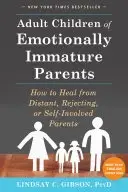
Adult Children of Emotionally Immature Parents by Dr. Lindsay Gibson
Adult Children of Emotionally Immature Parents
by Dr. Lindsay Gibson
If you grew up with an emotionally immature, unavailable, or selfish parent, you may have lingering feelings of anger, loneliness, betrayal, or abandonment. You may recall your childhood as a time when your emotional needs were not met, when your feelings were dismissed, or when you took on adult levels of responsibility in an effort to compensate for your parent’s behavior. These wounds can be healed, and you can move forward in your life.
In this breakthrough book, clinical psychologist Lindsay Gibson exposes the destructive nature of parents who are emotionally immature or unavailable. You will see how these parents create a sense of neglect, and discover ways to heal from the pain and confusion caused by your childhood. By freeing yourself from your parents’ emotional immaturity, you can recover your true nature, control how you react to them, and avoid disappointment. Finally, you’ll learn how to create positive, new relationships so you can build a better life.
Discover the four types of difficult parents:
* The emotional parent instills feelings of instability and anxiety
* The driven parent stays busy trying to perfect everything and everyone
* The passive parent avoids dealing with anything upsetting
* The rejecting parent is withdrawn, dismissive, and derogatory
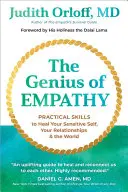
The Genius of Empathy by Dr. Judith Orloff
The Genius of Empathy
by Dr. Judith Orloff
If you grew up with an emotionally immatureAEmbrace empathy as your superpower for transformative personal healing, deeper relationships, and more potent work in the world.
Empathy is no weakness―it holds transformative power to heal ourselves, strengthen our relationships, and amplify our purpose. Dr. Judith Orloff, known for landmark works like The Empath’s Survival Guide, shares an essential new resource for cultivating empathy as a daily healing practice and a form of emotional intelligence. With The Genius of Empathy, Dr. Orloff presents a potent guide not only for highly sensitive people but for anyone with the desire to develop the gifts of empathy that we all possess.
Drawing on insights from neuroscience, psychology, and energy medicine, Dr. Orloff teaches powerful lessons, including:
• Your empathic style—tools for discovering and nurturing your unique sensitivities
• Self-care for empaths—practices to soothe your nervous system to prevent empathy overwhelm
• Setting healthy boundaries to regulate how you process the emotions of others
• How to apply empathy to ourselves to find greater self-love and healing, including from trauma
• Recognizing and protecting yourself from empathy-deficient persons such as narcissists, sociopaths, and bullies
• Using empathic listening and leadership in any situation—at work, in your relationships, and in service to the world
Each chapter is filled with Dr. Orloff’s most valuable insights and tools for living with greater connection, safety, and empowerment as your empathic abilities blossom.
The Genius of Empathy offers practical, action-driven guidance for connecting our minds and hearts to embody our most authentic, fierce, and compassionate selves. “Cultivating empathy is a kind of peaceful warrior training,” says Dr. Orloff. “You will learn to be both strong and loving, neither a pushover nor rigid. Wherever you are in your life, this book can meet you there and lift you higher.”
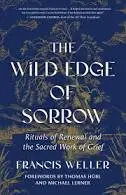
The Wild Edge of Sorrow Rituals of Renewal and the Sacred Work of Grief by Francis Weller
The Wild Edge of Sorrow
Rituals of Renewal and the Sacred Work of Grief
by Francis Weller
The Wild Edge of Sorrow offers hope and healing for a profoundly fractured world—and a pathway home to the brightness, pains, and gifts of being alive.
Introducing the 5 gates of grief, psychotherapist Francis Weller explores how we move through the waters of grief and loss in a culture so fundamentally detached from the needs of the soul.
• The first gate recognizes—and invites us to accept—the painful truth that everything we love, we will lose. With this acceptance comes beauty and responsibility—and an openness into which we can pour the full love of our hearts. At the first gate, we meet the sorrow of losing a loved one; the grief of illness; and the unique and profound pains that accompany loss by suicide.
• The second gate helps us uncover and tend to the places that have not known love: the neglected pieces of our soul that need restoration and care. These “places” can be our secret shames, or the parts of us that we feel are undeserving of love. At the second gate, we face our shadows and heal our most tender wounds.
• The third gate meets us at the sorrows of the world, inviting us to open to the grave pain of our planet: the destruction of ecosystems, the harms of extractive capitalism, the unfathomable pain of war and occupation. We learn to honor and hold this grief even as we move through it, recommitting ourselves to the actions our souls call upon us to perform in service of healing and renewal.
• The fourth gate, what we expected but did not receive, is present in each and every one of our lives. We may need love from a parent or partner unable to give it; we may lack the language to ask for the care we deserve. Each is a loss that must be acknowledged and grieved to move toward wholeness.
• The fifth gate opens to our ancestral grief: the traumas, pains, losses, and unrealized dreams of those who came before us. Weller invites us to reconnect to our bodies, our communities, and the ancestral knowledge we hold in our bones...but may have forgotten.
Profoundly moving, beautifully written, this book is a balm for the soul and a necessary salve for moving together through difficult times. Grounded in ritual and connection, The Wild Edge of Sorrow welcomes each grief with care and attention, opening us to the feelings, experiences, and sacred knowledge that connect us to each other and ultimately make us whole.







Protect Your Peace (Without Hardening Your Heart)
Are you tired of feeling like you have to choose between being a kind person and protecting your energy? You can protect your peace without hardening your heart. Take my Free Boundaries for Empaths Class today!